A tool says a phrase is difficult, yet few pages use it directly in their titles. Which observation should you trust? Both, and neither on its own. The keyword difficulty score and the title count measure different things, and a keyword difficulty difficulty assessment is complete only when it explains what you can add that the current pages lack.
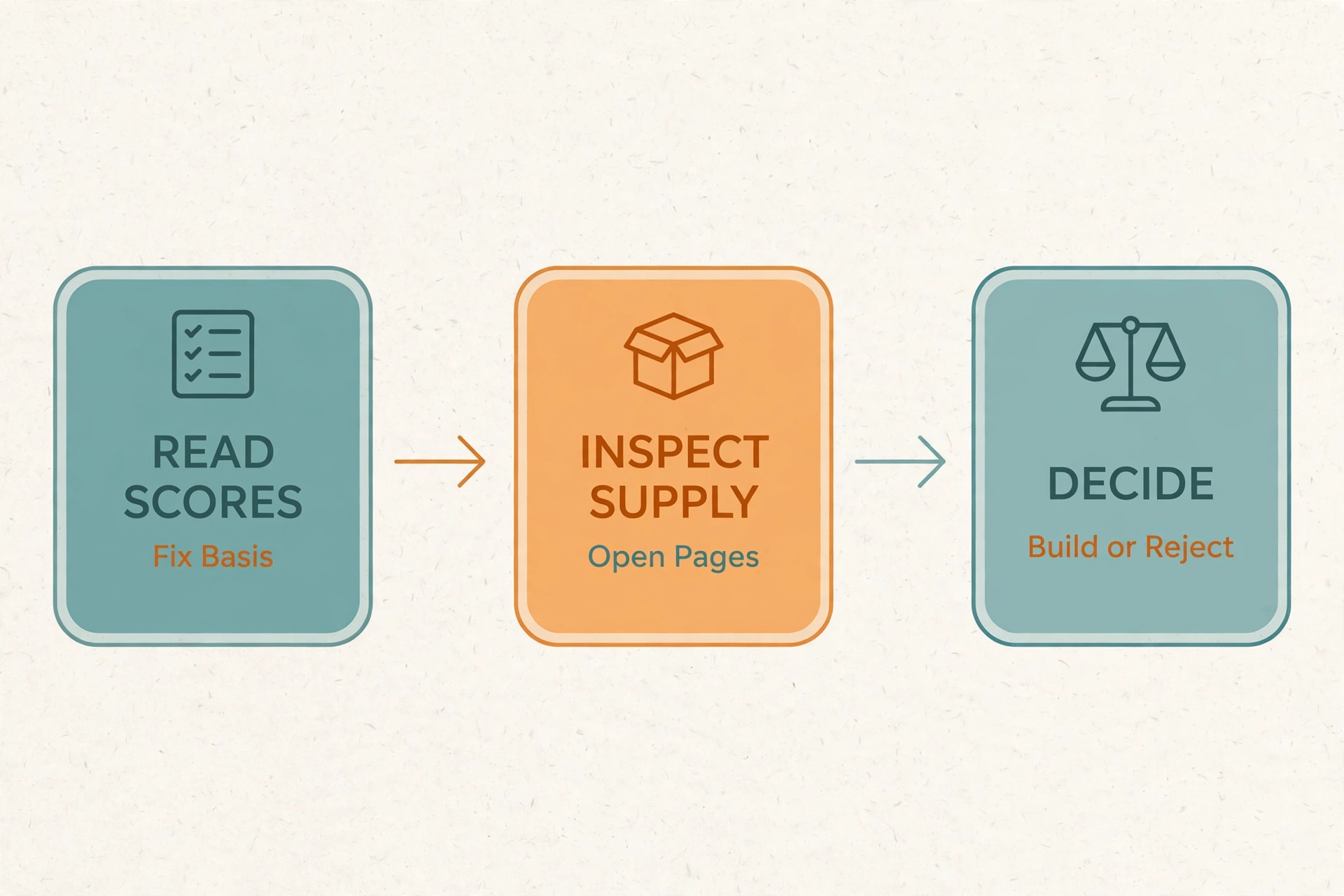
Work in this order: read the keyword difficulty scores, inspect the real supply of pages, then decide. The first step produces comparable figures on a fixed basis. The second produces a set of leading pages you have actually opened. The third produces a keyword difficulty decision — build, investigate, or reject — with the evidence written beside it. A single keyword difficulty score, taken on its own, skips the two steps that make the decision defensible.
Read scores, inspect supply, decide
- Keyword difficulty Read scores. Fix region, language, and model before comparing any keyword difficulty difficulty figure.
- Inspect supply. Count explicit title matches, then open the leading pages and study the tasks they serve.
- Decide. Name the added value, or keyword difficulty record why the phrase is set aside.
Keyword difficulty: Ask how strong the leaders are, then how much relevant supply exists
A keyword difficulty difficulty score from a tool usually emphasises the competitive strength of the current leading results. Title queries, such as a title-matching query and a query requiring every word in the title, observe how many pages use the expression directly in their titles. A title-supply ratio divides that count by monthly volume. These are different observations. Leader strength and title supply answer different questions.
A high keyword difficulty score warns that the leading results may be strong. It leaves open whether every specific user task has been satisfied. A low title count shows few explicit matches. It leaves open whether pages using different wording complete the same task, and whether users will click a new page at all. Bring four kinds of keyword difficulty evidence together, and understand what each one can answer before using it to judge.
| Signal | Question answered | Question left open |
|---|---|---|
| Keyword difficulty Difficulty score | A tool model’s keyword difficulty estimate of leading-result competition in a specified country. | Whether your page is genuinely more useful, or whether keyword difficulty scores from different tools are comparable. |
| Title-matching supply | How many results explicitly target the expression in their titles. | Synonymous pages, strong brands, and pages meeting the task without an exact title match. |
| Search volume | A historical keyword difficulty estimate of demand scale. | Available clicks, their distribution, and long-term stability. |
| Manual result inspection | Leading page types, task quality, and result features. | Future ranking or any guaranteed result. |
Focus the combined keyword difficulty evidence on a specific task. Suppose a phrase has a high keyword difficulty score, but most leading results are broad homepages, while users actually want one particular feature. Investigate whether a feature page that opens directly into the action completes the task faster than those homepages. Conversely, a low keyword difficulty score leaves few worthwhile clicks when the results page already answers the keyword difficulty question directly. Turn the reasoning into a specific description of how you would build the page, rather than stopping at a slogan about tackling difficult phrases.
Check the object, region, and definition behind the keyword difficulty score
For the same term, one tool gave a keyword difficulty score of 91 and analysed the number of high-authority domains among the leading results. A second tool gave a keyword difficulty difficulty score of 81 in the selected region, alongside a keyword difficulty estimate of about 374 referring domains for leading positions. Switching the region to Japan produced a keyword difficulty score of 12 and about 13 referring domains. More than a keyword difficulty score changed: the competing results in the target market changed too.
A third tool showed a similar pattern: keyword difficulty difficulty was higher in the United States and lower in France and Indonesia. Switching to the French expression for the same task produced another set of figures. These historical values explain the conditions required for keyword difficulty comparison: changing region, language, or model changes what the keyword difficulty score means. Before accepting a low keyword difficulty score, check whether it actually describes the users and market you intend to serve.

For an actual query, first fix the target country and language, and record the tool, query date, and keyword difficulty score. Search volume should use the corresponding keyword difficulty market definition. Combining global volume with one country’s keyword difficulty difficulty score is not enough to decide whether to proceed. Once the conditions are fixed, open the leading pages and examine their subjects, brands, and page types. Even when many high-authority domains appear, establish whether they answer a broad keyword difficulty question or exactly the same specific task as yours.
Referring-domain counts and link quality help you understand competitors, but a tool’s suggestion that you “may need links from a number of websites” is not a minimum quota for entering the top ten. Distinguish the number of referring domains from the number of links on a single website: these are different units. If you plan to switch countries or languages, check how local users express the query. A machine-translated phrase may not be common local usage. Even after finding a low-scoring expression, your page must genuinely deliver the task in that language.
This keyword difficulty check matters most when comparing platforms. A local interest index measures interest, not daily search counts. Placing it next to search volume does not make the two columns directly divisible. Keyword difficulty Difficulty scores work the same way: a keyword difficulty score of 60 in one tool and 17 in another come from different models. Calculating an average of the two does not make the keyword difficulty judgment more reliable. Establish the units and what is being measured before deciding which figures can be compared.
Use the title-supply ratio as a keyword difficulty filter, not a ranking formula
When many keyword difficulty candidate phrases await inspection, opening each results page closely takes time. A rough keyword difficulty filter helps set the order of inspection. The ratio is simple: the count from a title query requiring every word in the title, divided by monthly search volume. One historical keyword difficulty example used 1,790 title matches divided by 200,000 monthly searches, giving about 0.00895, with values below 0.25 described in the keyword difficulty source method as a low-competition heuristic.
Read the numerator and denominator separately. The numerator is a clue to the supply of pages explicitly using the target phrase in their titles. The denominator is tool-estimated demand. A low ratio may suggest inspecting the phrase sooner, but both sides carry estimation and keyword difficulty definition problems. The value 0.00895 says nothing about how good the leading pages are, and it gives no assurance that a page will reach the first results page. The ratio orders the queue; opening pages decides.
| Step | Record | Check |
|---|---|---|
| Fix phrase and region | Record the full phrase, target country, language, and date. | Is volume worldwide or local? Does it include close variants? |
| Check title supply | Query with the title operator and save the result count and a screenshot. | Switching to a looser title query changes the keyword difficulty definition; do not compare the two batches directly. |
| Calculate the ratio | Result count divided by monthly volume; retain both raw figures. | A low ratio may reflect high volume, few titles, or estimation bias. |
| Inspect actual results | Open the top ten; keyword difficulty review tasks, page types, quality, and direct answers. | Strong synonymous pages remain strong when their titles lack the exact phrase. |
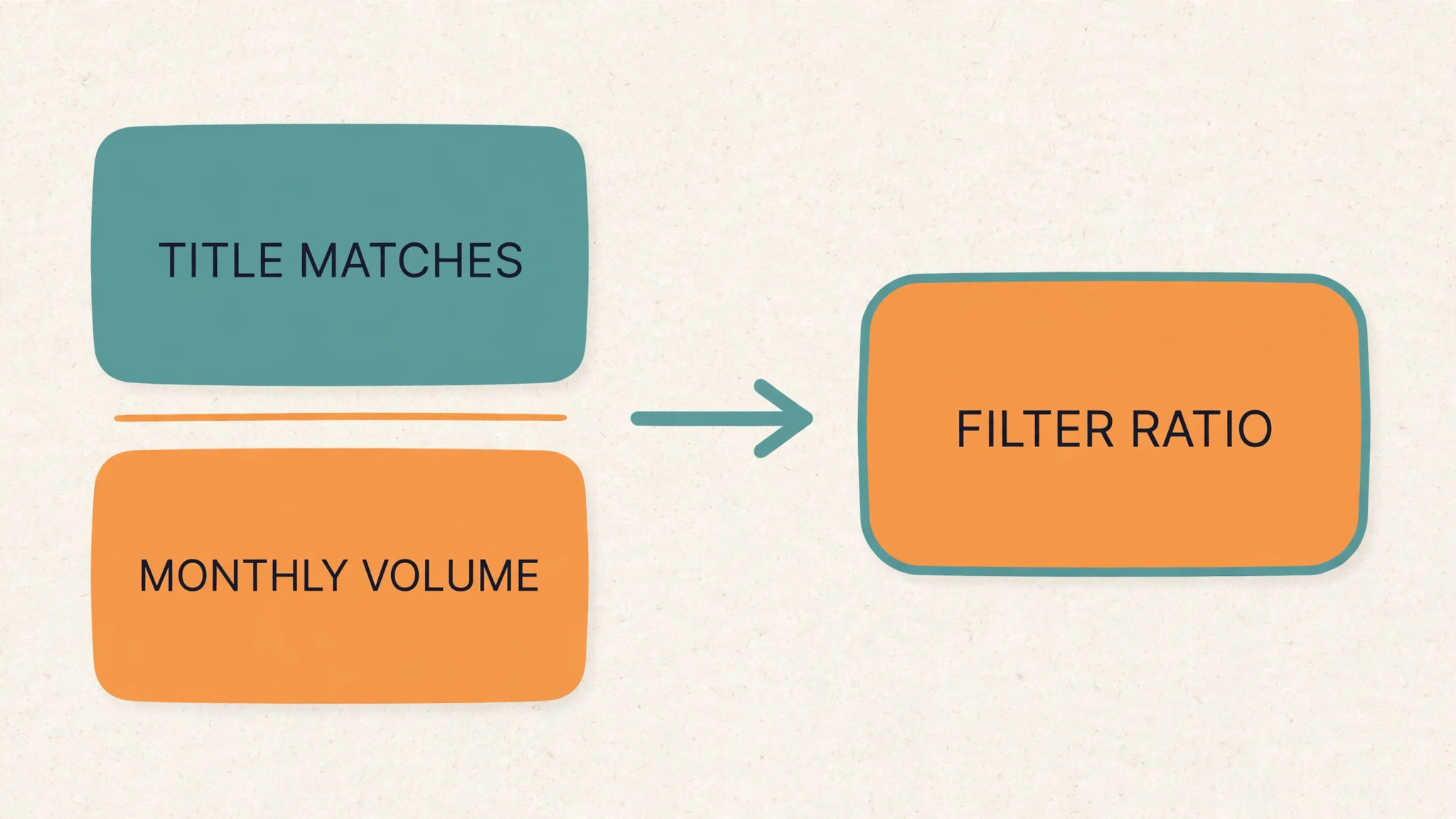
Separate calculation from keyword difficulty judgment in the record itself. Calculation: 1,790 divided by 200,000 equals 0.00895. Observation: in this query, explicitly matching titles are relatively few compared with the tool’s keyword difficulty monthly-volume estimate. Still open: current clickable demand, the specific intent, and your site’s ability to rank. Keep the original numerator and denominator in the keyword difficulty record. If you later find that monthly volume includes close variants, or that the title query uses a different keyword difficulty definition, you can understand why the ratio changed instead of focusing only on the keyword difficulty score. Treat the 0.25 threshold as part of one historical method, useful for ordering keyword difficulty candidates. When a phrase reaches its turn, open pages and establish what users actually want to do.
Why high volume and low keyword difficulty difficulty can still be unattractive
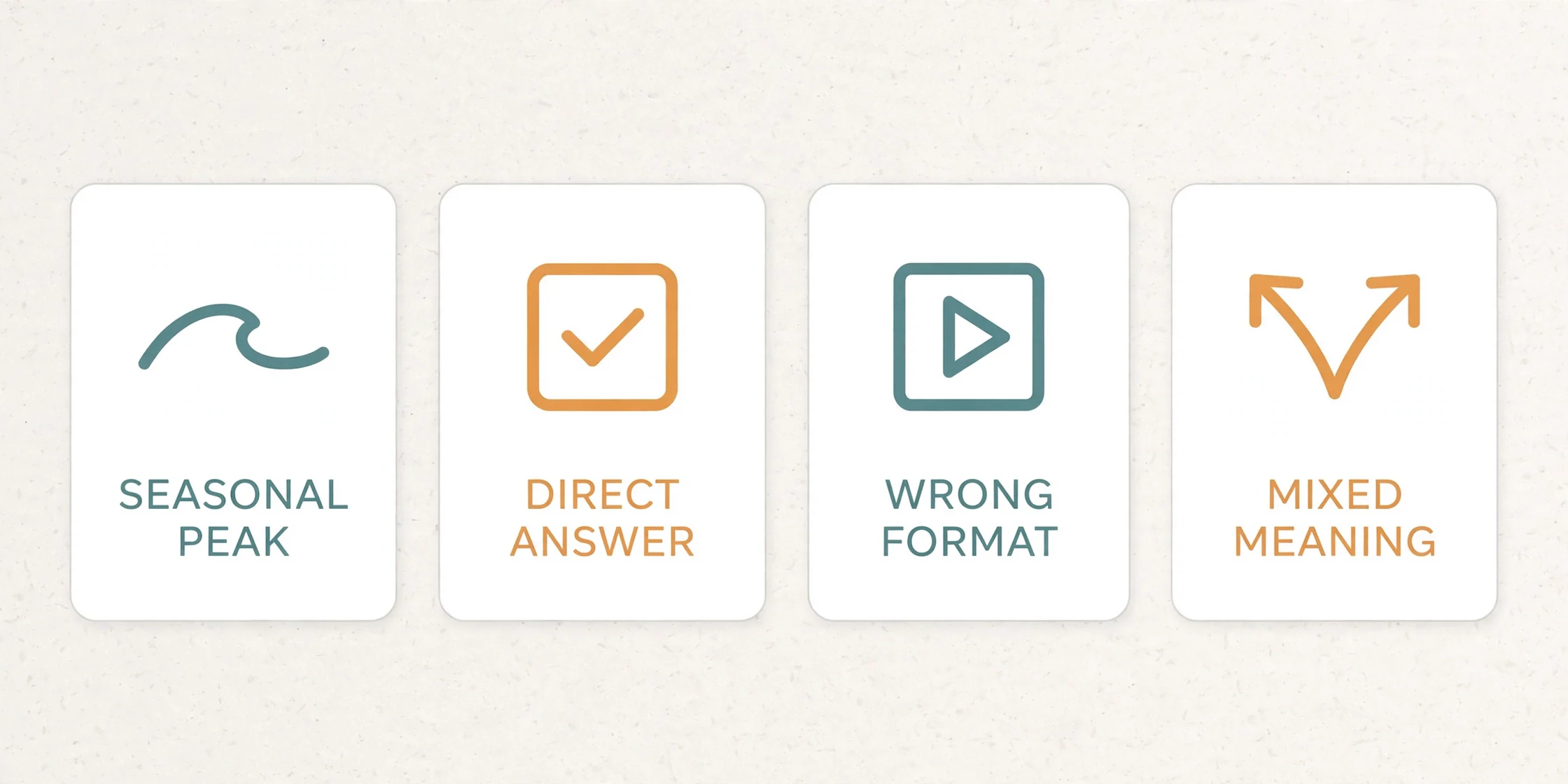
Why must keyword difficulty low-scoring candidates still be ruled out individually? After filtering by keyword difficulty difficulty and search volume in one keyword tool, a keyword difficulty screening pass met several very different situations. Football-game team names were seasonal phrases. A personality test phrase was a brief peak. Keyword difficulty questions of the “how many” type could be answered directly on the results page. Results for a crochet stitch favoured video. All could pass a numerical keyword difficulty filter, while the timing of users’ needs, their click paths, and the appropriate content formats differed.
Another keyword difficulty candidate, a converter for online videos to audio files, once showed extremely high search volume and relatively low keyword difficulty difficulty, while raising platform and copyright issues. At that point the tool has performed the initial screening it can provide. Keyword difficulty Trend checks, results-page inspection, and assessing what can be delivered lawfully are separate next steps. The actions below turn an apparently low-cost opportunity into specific keyword difficulty questions to verify.
| Trap | How to identify it | Response |
|---|---|---|
| Brief or seasonal peak | Inspect 12-month and five-year trends and event dates. | Use the post-peak baseline for long-term economics; set exit conditions for short-term work. |
| Results complete the task directly | Search yourself and inspect calculators, snippets, weather, and similar modules. | Consider it only if you can add deeper functionality. |
| Wrong page type | Keyword difficulty check whether leaders are videos, images, maps, or products. | Adapt the delivery format rather than insisting on text alone. |
| Mixed meanings or brand intent | Inspect related queries and leading sites. | Exclude navigation, misspellings, and mixed meanings. |
| Delivery or rule concerns | Review permissions, platform rules, and use. | Find a clearly authorised neighbouring need, or reject it. |
Other keyword difficulty candidates merit the same individual keyword difficulty checks. One phrase for plain backgrounds received a keyword difficulty score of 60 in one tool and 17 in another, so the tool difference needs explaining first. A main holiday phrase was difficult, while adding a year could change that, which calls for further keyword difficulty checks of timing and annual tasks. For a wallpapers phrase, expand related expressions to establish which kinds of assets users want, while a daily puzzle phrase requires content to change daily with the answer.
Now consider “near me” phrases: many combinations of places and objects are theoretically possible, but the combination count says nothing about whether each place has real, distinct, accurate information. The arithmetic behind mass-producing such pages is no substitute for local keyword difficulty data and the ability to maintain it. The easier a keyword difficulty candidate appears to scale, the more keyword difficulty reason to test its premise first with a few specific tasks.
Keyword difficulty: Use ten leading pages to ask whether you can do better
Once a roughly screened phrase merits further keyword difficulty investigation, connect five steps: confirm demand, check title supply, open the leading results, assess whether the task is already satisfied, and finally decide what type of page to build. The first two steps identify what to inspect. The last three determine whether to invest.
When reviewing the top ten pages manually, keep asking the same keyword difficulty question: can a user arriving here smoothly complete the task just identified? A competitor ranking with its homepage is an observation about page format. Building a dedicated page does not automatically make yours more useful. Proceed only when you can identify which features, information, or aspects of the experience it would add that existing results lack. Use the table below to retain those keyword difficulty comparisons.
| Inspect each leading page | Record | Decide |
|---|---|---|
| Page type and intent | Homepage, tool, keyword difficulty question, video, or product; alignment with the same task. | Your appropriate page type, or whether to choose another phrase. |
| Actual delivery | Immediate use, correct output, login, and payment requirements. | The verifiable improvement you can offer. |
| Trust and maintenance | Sources, author, update dates, errors, and broken links. | Whether maintenance investment creates an advantage. |
| Site and promotion | Relevant content, internal links, references, and genuine promotion. | Whether you can support lasting competition. |

After comparing, first check whether you can name a verifiable improvement. If the leading tools are already accurate, fast, free, and suitable for users, while you can only copy their surface, stop work on this keyword difficulty candidate for now. If existing answers are incomplete, steps are cumbersome, or a particular group is overlooked, put the improvement into the page specification: what users enter, what output they receive, how errors are handled, what explanations and related content are needed, and how often the page will be maintained. That creates a next step that can be implemented and assessed. Internal links and promotion help people discover the page; the page itself still needs to complete the promised task.
Practice three different conclusions
An inspection need not lead every keyword difficulty candidate to a new site. The same process can reasonably produce three keyword difficulty conclusions: proceed, investigate further, or abandon. A low-scoring phrase does not necessarily deserve priority. The three examples below show how to state the basis for a keyword difficulty conclusion. They use only historical clues and keyword difficulty teaching assumptions. Before actually starting, check the trends and results page at that time.
- Plain backgrounds → investigate further. Historical keyword difficulty records show about 2.2 million worldwide monthly searches, a keyword difficulty score of 60 in one tool, and 17 in another. Open results to separate plain-image downloads, background removal, and webpage background code. Fix the country and assess image search versus web search before choosing a tool or asset page.
- A holiday phrase with a past year → historically viable, but outdated. Comparing broad and year-specific keyword difficulty difficulty shows that a year can narrow a task. A page for a past year cannot serve the current year by changing its title. Prepare accurate later-year dates, national customs, and gift and activity tasks in advance, then inspect post-holiday visits. Keep old-year facts separate from the next year.
- A direct-answer “how many” phrase → usually reject a text-only answer page. Historical results already answer directly. Unless users need working steps, interactive inputs, or special conditions, repeating a short answer offers little click opportunity. A low keyword difficulty score here calls for finding the keyword difficulty reason, rather than assuming opportunity.
Two more seemingly attractive keyword difficulty candidates show the same discipline. A daily puzzle phrase may suggest publishing a new page every day, but users want the correct answer for that day. First solve the updating mechanism, avoiding premature spoilers and outdated content, then consider how to publish each day. Automatically creating a page every day is only a production action; accuracy and timeliness are the task requirements.
A “near me” phrase may suggest many combinations of places and objects. What makes local information useful is accurate addresses, operating status, scope of applicability, and a way to obtain updates. Establish where these keyword difficulty data will come from and how to keep them correct before discussing page expansion. Without them, automatically appending “near me” creates no usable local service.
The keyword difficulty video-converter example offers another reminder: when volume is very high and keyword difficulty difficulty very low, first ask why. Examine platform rules, content permissions, searchers’ actual tasks, and existing results to understand why supply looks this way. If you cannot provide a lawful, clearly defined result, the conclusion should be to abandon it. Low keyword difficulty tool difficulty may reflect limited supply, risk, or keyword difficulty calculation definitions rather than effortless opportunity. Record the reason for exclusion, so later keyword difficulty screening of similar phrases does not require repeating the investigation.
| Recommended action | Basis | Next keyword difficulty evidence |
|---|---|---|
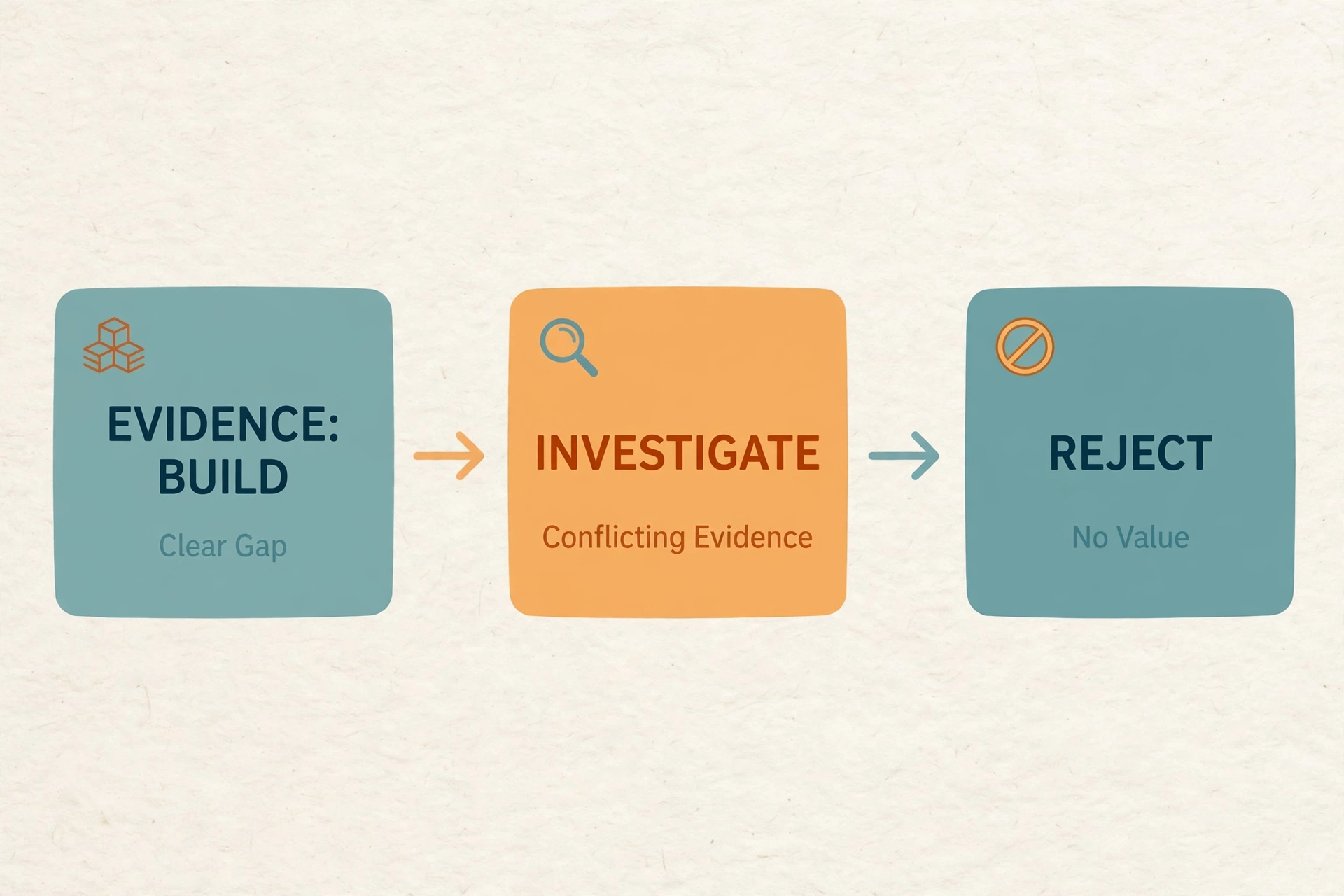
| Build | A clear task, a verifiable gap in leaders, and ability to deliver and maintain. | Specify the minimum page and real keyword difficulty usage metrics. |
| Investigate | Conflicting tools, mixed meanings, seasonality, or unclear results. | Fix geography and timing, separate tasks manually, and examine trends. |
| Reject | Results already satisfy the need, no clicks remain, legitimate delivery is impossible, or only duplicates would result. | Record why and return to the queue. |
Keyword difficulty: Classify one phrase as build, investigate, or reject
Complete every field of this decision card, with no universal weighted keyword difficulty score.
- Phrase, region, language, date, and specific user task.
- Volume and source, including variant and seasonal effects.
- Keyword difficulty Difficulty scores from two tools and leader strength; do not average them directly.
- Title supply, operators, and the original ratio numerator and denominator.
- Current top-ten page types and direct answers, ads, or videos.
- What the first three pages solve and omit.
- Your verifiable added value and production and maintenance costs.
- Keyword difficulty conclusion: Build for a clear task and deliverable gap; Investigate for conflicting keyword difficulty evidence; Reject where there are no clicks, no capability, no unique value, or no manageable risk.

For example, the plain-backgrounds phrase has widely differing keyword difficulty tool scores, so first choose “investigate.” Separate plain pictures, image background removal, webpage backgrounds, and design assets in current results, then assess delivery. Neither one high nor one low keyword difficulty score concludes the research. Completing this worksheet constitutes an actual keyword difficulty difficulty assessment: a score alone is not a keyword difficulty decision; the inspected supply and the named improvement are.
Comments
Join the conversation. Comments are reviewed before appearing.
Loading comments…