A successful website is a map of demand. Its traffic shows which tasks people already bring to search, which pages serve those tasks, and which demand neighbouring needs sit one step away.
The work is to read that demand map in order. Start with the site as a whole, then look at where its visits come from, then at the phrases and pages behind its search visits, then follow those pages to the next demand need. Each step narrows the question. A large traffic total on its own tells you where to look next. A single phrase, a single page, and a single demand user task tell you what to build.
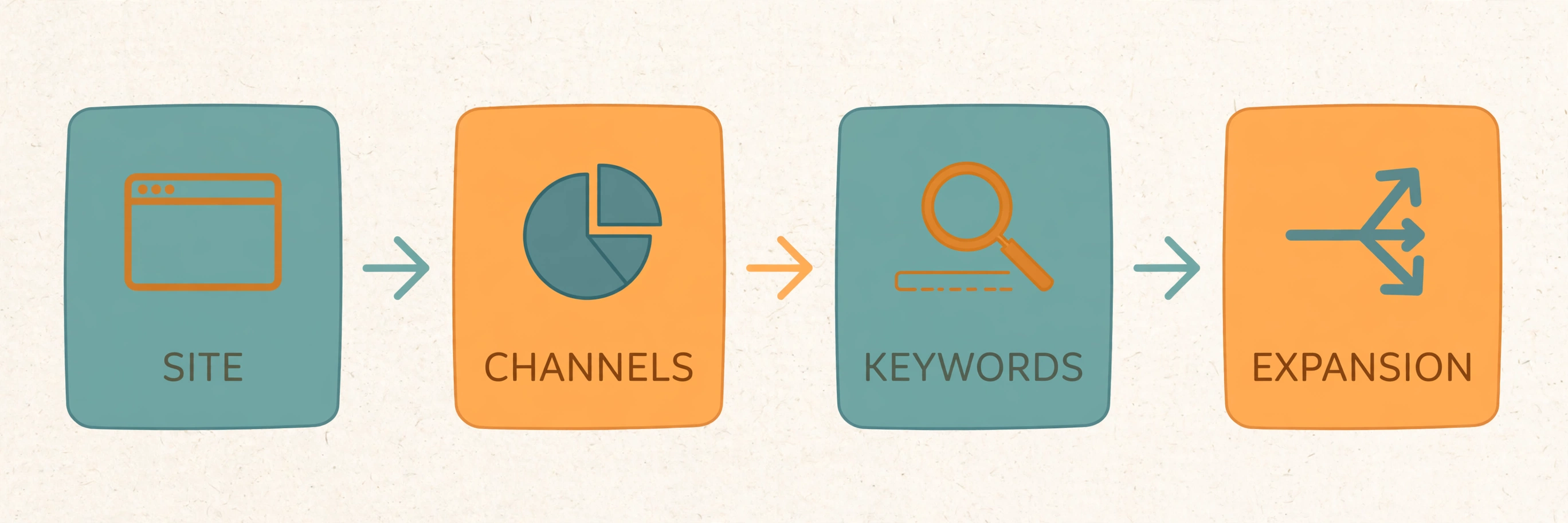
The four-step demand research chain
Work through the chain in this order:
- Site. Who does the site serve, at what demand scale, and in which countries?
- Channels. Do visits come from search, direct entry, social media, or referrals?
- Keywords and pages. Which real page receives a non-brand query, and what demand task does it solve?
- Expansion. Follow pages, neighbouring sites, and related phrases to the next demand needs.
The smallest useful demand research record is one phrase, one page, and one demand user task. Record those three together every time. A large keyword on its own leaves the demand task open: people might want a download, a demand comparison, a purchase, or a direct action. Open the page and see what it actually delivers. Note where delivery falls short: missing functionality, outdated information, too many steps, or a page that answers a different question from the one asked.
Keep the record complete enough to repeat. Note the estimation tool, the region, and the month. Note the traffic shares for search, direct, social, and referral visits, with the total they belong to. Note the non-brand queries, the ranking page for each one, the page title, and what the page contains. Note the intended action, whether you can deliver it, and any evidence that people pay for it. Keep estimated search volume, estimated traffic to that site, and the clicks a new page could receive in separate columns. They measure different things, and mixing them turns a demand research note into a guess about results.
Separate demand brand scale from search entry points
A site total mixes two different kinds of strength. Brand strength brings direct visits from people who already know the name. Search entry points bring visits from people who typed a demand task and found a page. A new site can study the second kind. It cannot borrow the first.
Take a well-known note-taking workspace as a example. One snapshot put its monthly visits at about 153 million, with around 7% from search, or roughly 11 million search visits. A small share of a very large total is still a large number, and it is a useful place to look for topics. Compare tools and snapshots with care: another estimation tool put its organic search visits at about 4.3 million, using a different model, country mix, period, and definition. Work inside one tool, one region, and one period for a single demand investigation, then check the phrases against current search results.
Choose the sample site by the demand question you want to answer, not by the size of its total.
A homework question-and-answer site is a direct demand study in search pages. In one snapshot, about 86% of its visits came from search, and its structure is many individual demand question pages, each receiving some traffic. A digital product marketplace tells a different story: about 24 million monthly visits in one snapshot, with social and referral channels carrying much of the weight. Product pages shared on social media show promotion at work. Sorting its pages by organic search separately shows the search demand underneath. An AI companion chat site, at about 175 million visits in one snapshot, is heavily shaped by brand phrases. Filter those out first, and the remaining non-brand landing pages show the companion and demand role-play tasks people search for.
A one-minute screen keeps the start honest. State the demand user task you want to research. For tools, find working demand task pages. For educational answers, find individual questions. For product demand, inspect real product pages and their channels. Totals and lists of similar sites show where to investigate next. The pages show what to build.

Filter the keywords, open the pages, assess the clicks
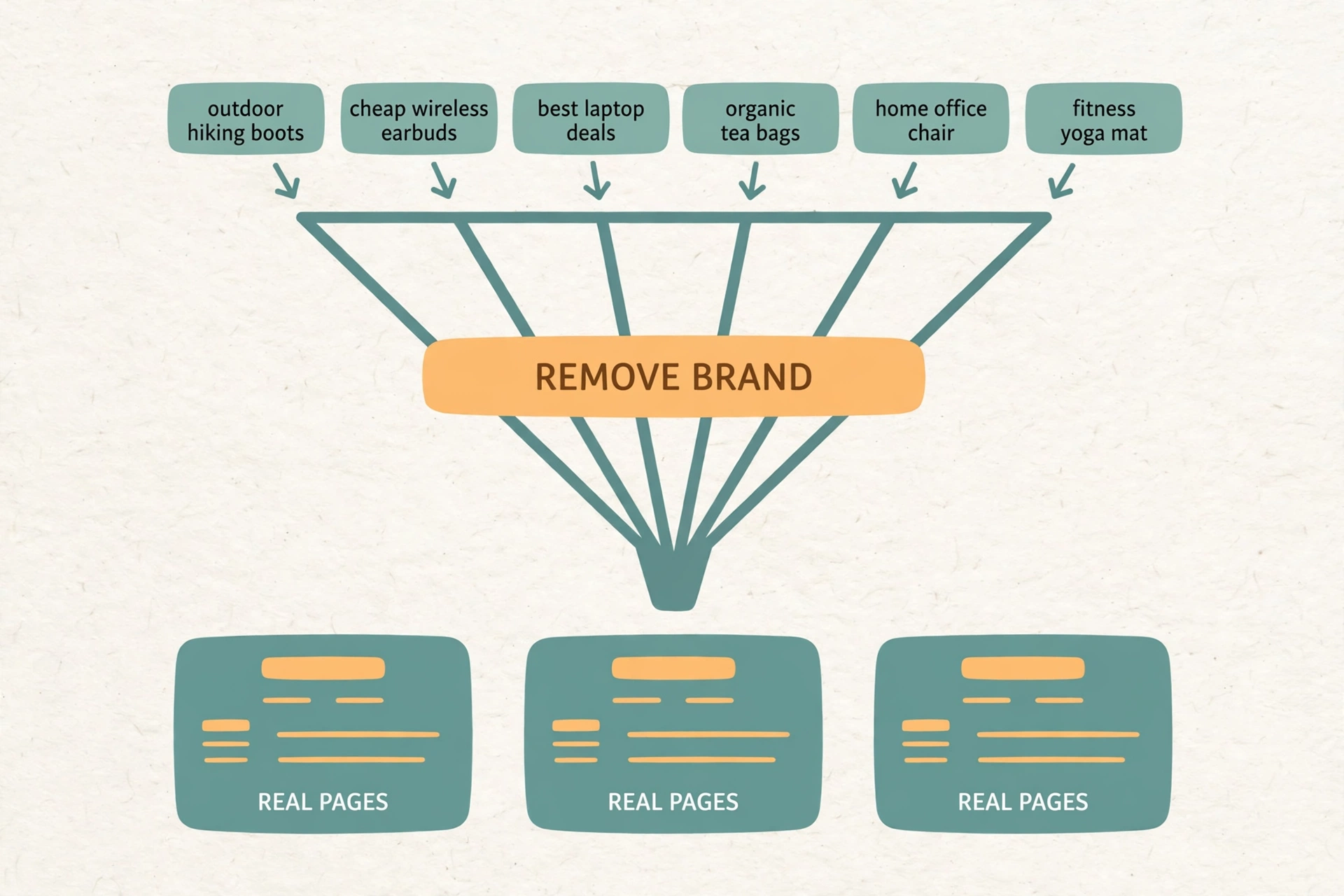
Brand phrases hide the researchable demand. A brand name, its common misspellings, and navigational phrases all point to people who already know the site. Remove them, and the remaining phrases show the demand tasks a new page could serve.
For the question-and-answer site, removing the brand name and more than ten spelling variants left specific demand homework questions in view. One demand question asked how viruses differ from bacteria. The estimation tool put its searches at about 22,200 and clicks to the site at about 2,900, around 13%. Another demand question, asking which sentence should be revised to reduce wordiness, showed about 4,400 searches and 1,100 visits, around 25%. The two phrases have different click demand opportunities, and the reason sits on the results page. When a direct answer already finishes the demand task on the results page, fewer people need to open any page. Even a first-place page receives a share of searches, never all of them.
Work the filter in five steps:
- Remove brand names, common misspellings, and navigational phrases from the keyword table.
- Find the matching page for each remaining phrase, and name its type: homepage, category, demand question, feature page, or product page.
- Put the phrase back into current search results. Note direct answers, videos, maps, product panels, and the other sites competing for it.
- Open the leading pages. Do they give a complete answer, a partial preview, or a login barrier? Record whether a visitor still needs to click.
- Keep search volume, traffic to the site, and obtainable clicks in separate columns, and record how the result layout shares attention for each phrase.
Many demand question pages receiving some traffic each is a structure to study, not a template to copy in bulk. Each answer page must be accurate, checkable, and appropriate to the question, with an explanation where the demand task needs one. The same layout lesson appears in a high-demand phrase such as happy birthday: about 823,000 searches and about 67,500 estimated visits, around 8%, with images, encyclopedia entries, and videos taking much of the result space. Record how the layout distributes attention for each query, and why different queries on the same site offer different click demand opportunities.
Follow a small phrase to a larger class of demand needs
A small, specific phrase often carries a larger demand task inside it. The skill is to extract the task, follow it to demand neighbouring needs, and choose a legitimate version you can deliver well.
Start with a chess demand exercise book for beginners, found among the organic keywords of a file-sharing site. The title itself has limited monthly volume, and the title alone gives no site to build. Related expressions add words such as pdf and free pdf. Those words point to a file people want. The next demand question is what they want the file for: to read the book, to practise the demand exercises, or to print a demand worksheet. Copying a book file without permission is off the table, and jumping from one book to every free file expands the scope beyond any deliverable.
Follow the demand task instead. The broader word is printables: material people download or print and use. From printables, the trail leads to printable calendars and browser-print tools that run in the frontend. A calendar page has a clear, specific demand task: view, customise, or print a particular year’s calendar, with choices for week start, national holidays, blank versions, and sizes. One calendar site in the trail recorded about 600,000 visits and 40,000 indexed pages, with neighbouring sites ranging from hundreds of thousands to millions of visits. Page count alone is a lead for demand investigation. The decision to build rests on a distinct, useful deliverable.

| Starting point | Task discovered | Further demand question |
|---|---|---|
| A specific chess book title | Read or practise chess problems | Do users need authorised demand practice material, online puzzles, or printable worksheets? |
| Printables | Download or print usable material | Which contexts, sizes, years, and formats are searched most? |
| Calendar and year | View, customise, or print a particular year’s calendar | Are week-start choices, national holidays, blank versions, or different sizes needed? |
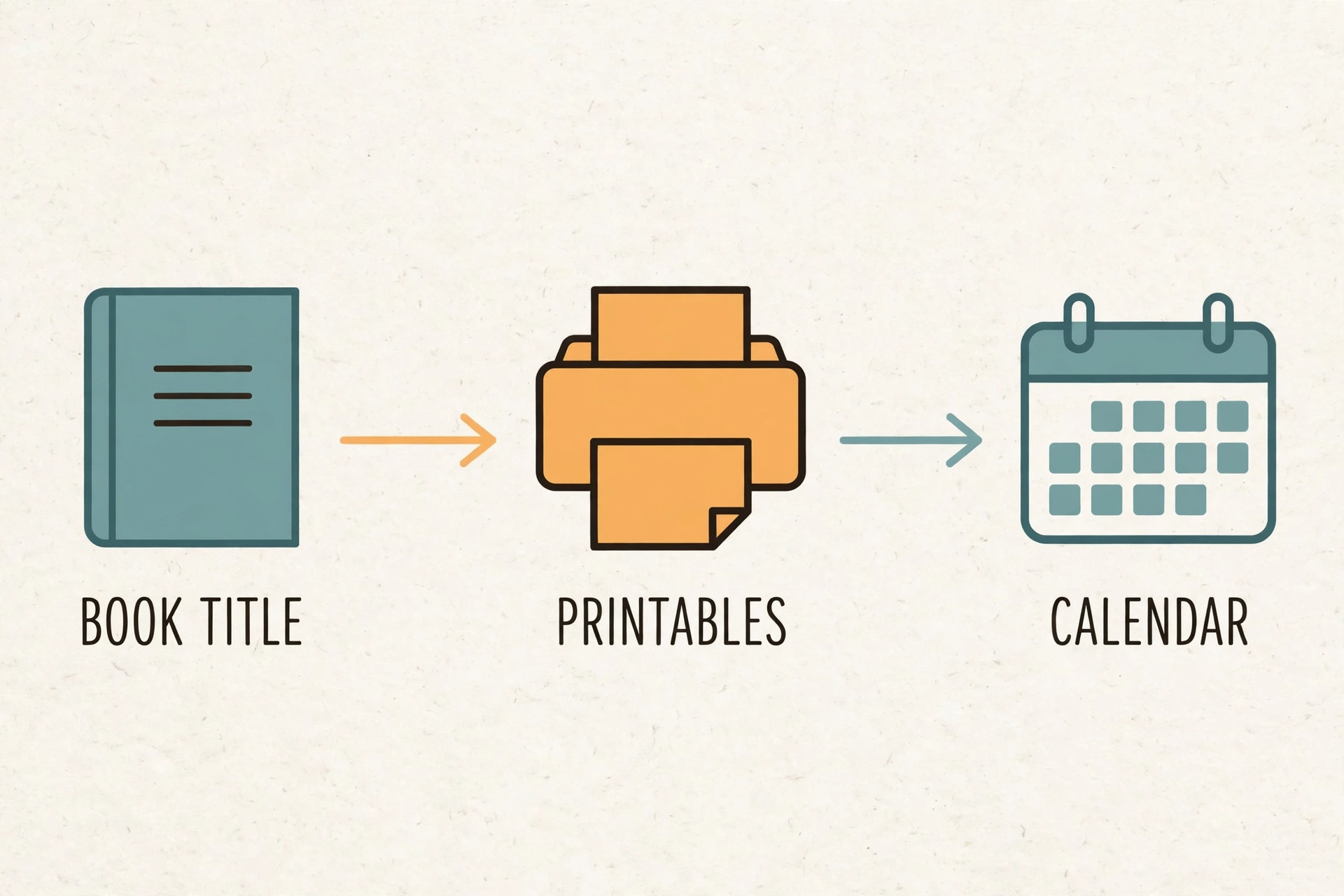
Deliver one useful calendar type first, then expand by genuine differences in year, country, and format. Check each new page for outdated content and duplication with pages you already have. Three mazes do not need ten empty categories, and the same rule holds here: build only the pages you can fill with real, distinct content.
Ask four different demand questions of the top pages
A top-pages list answers a different demand question depending on how you read it. Read the same list four ways, one per site type.
A productivity workspace: find entry points across demand tasks. Move from total traffic and channels to keywords and individual pages. High direct demand traffic signals brand strength. Remove brand terms, then find specific tasks the brand does not exclusively own. The figures illustrate the demand investigation sequence: the sequence itself is the reusable part.
A creator marketplace: separate product demand from promotion. Skip the platform feature pages in the top-pages list and look at real products. One demand example is an AI attractiveness-rating service priced at no less than 8 euros, with about 1,055 displayed sales. Record the displayed sales, the price, and the channel separately. Sales arriving through social sharing show promotion at work. Sort by organic search again to study search demand on its own terms, and verify willingness to pay and delivery capability before discussing any replication.
An AI companion site: discover changes through new landing pages. Find companion and role-play demand tasks among the non-brand pages, then filter for pages newly observed by the estimation tool in that period. Newly observed means the tool first recorded traffic for the page in that period. It is a lead to investigate, and the check is whether the page is newly launched, newly receiving traffic, a brief demand trend, or an old phrase activated by a new product. A low difficulty score, such as 2, with three referring domains in one demand example, is a starting lead. Open the page and the current results before treating it as a demand opportunity.
Hosting subdomains: read a pool of demand clues. Organic landing pages on the subdomains of a hosting platform show products other people are trying. One example from June 2024 was a fortune-checking demand trend. Subdomain pages reveal experiments in progress. Recheck availability and intent, because pages disappear and topics fade, and a subdomain demand clue is a prompt to investigate, not a finished finding.
The worked demand example, step by step
The chess-book trail makes a complete demand exercise. Follow it in five steps, and keep a note at each step of where the demand clue came from, how the phrase was found, and what the current results showed.
- Record the unusually specific phrase. The estimation tool put the book title at about 1,500 worldwide monthly searches, 480 in the United States, with a difficulty score of 26. The title is too specific to choose on its own. Record the demand hypothesis that users want chess-practice material.
- Expand to the demand parent task. Related queries add file words, suggesting some users want a file. Ask whether they want to read, demand download exercises, or print a sheet. Each answer points to a different page.
- Move to a legitimate neighbouring demand task. Researching printables surfaces printable calendars, a demand lower-competition group of candidates with a clear technical deliverable. Choose a narrow start: one region, one year, one format.
- Open existing pages. A calendar site’s print action opens browser printing. Demand study other sites’ templates, holiday information, and mobile output. Reuse the interaction idea, not their images, text, or large URL inventories.
- Specify the first usable version. Monthly calendars for one region’s next year: correct dates, local holiday notes, print styles for standard paper, a week-start choice, accessible text, and clear download and print controls. After launch, watch whether users request other years or formats, and expand from those requests.
Apply the same demand method to the other site types. For a demand question page, ask whether searchers want a short conclusion or a full derivation, and whether the answer already appears in the results. The specification is an accurate answer, explained steps, the problem conditions, and demand sources. For a paid product page, ask whether sales come from social sharing or search, and whether another product could solve the same specific pain point. Verify willingness to pay first, then define clear functionality and pricing. For a newly observed page on a companion site or a hosting subdomain, ask whether it is newly launched, newly receiving traffic, a brief demand trend, or an old phrase given new life. The specification is a specific tool or information page with clear demand sources, a clear identity, and a fast update plan.
Complete one site-to-demand investigation
Use this worksheet for a single demand investigation, and stop expanding when the stopping rules apply.
- Start with a site relevant to the people you intend to serve. Record its name, audience, tool, region, month, and demand total-visit estimate.
- List five neighbouring sites, choose two for deeper work, and explain why each one is relevant.
- Record the search, direct, social, and referral percentages, and label every calculated figure as a demand estimate.
- Filter brand names and variants, then choose three non-brand queries with their landing pages.
- Open each page and search its phrase today. Record the demand task, the delivery, and the click obstacles.
- Follow one related phrase to a new site, then that site to a new phrase, creating a traceable path.
- Keep one demand task you can deliver better, and specify its minimum page.
Stop and return the idea to the queue when further expansion yields synonyms only, when demand rests on snapshots with no current demand user evidence, when real user evidence is absent, when unauthorised material sits at the centre of the idea, or when your page cannot improve task completion. Demand research ends at a decision: one task, one minimum page, and a clear next check. Browsing without that endpoint is not research.
That is the whole method. One site, investigated in order, gives you phrases, pages, tasks, and neighbours. One phrase, followed with care, gives you a demand task worth building. Build the smallest page that finishes that demand task, watch the same measures after launch, and let the next demand investigation start from what the page actually returned.
Comments
Join the conversation. Comments are reviewed before appearing.
Loading comments…